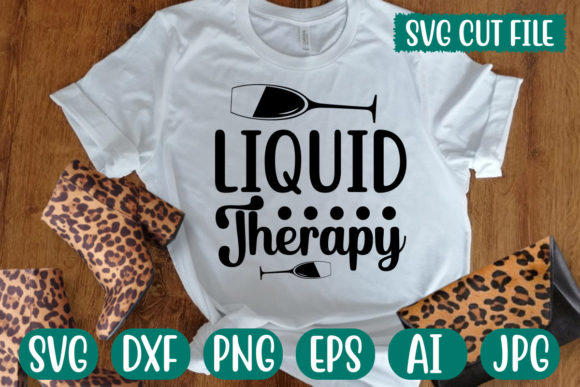
Liquid Therapy SVG: A Designer’s Review for Embroidery
As a designer who spends half my life digitizing and the other half stitching, I have learned that not every pretty graphic translates well to thread. We often browse marketplaces looking for that perfect digital embroidery file, drawn in by fluid lines and artistic concepts. Recently, I downloaded the Liquid Therapy SVG to test its viability for real-world projects. My goal was not just to see if it looked good on a screen, but to determine if it could hold up under the needle in a professional embroidery project.
The first impression of this design is one of calm movement. The title suggests a therapeutic quality, and visually, the flowing shapes deliver on that promise. It feels organic, avoiding the rigid geometry that sometimes makes machine embroidery look stiff or dated. For those of us creating T-Shirt Designs or boutique apparel, this kind of visual personality is crucial. It does not scream for attention; instead, it invites a closer look. However, aesthetic appeal is only half the battle. The real question is how these "flowing files" behave when converted from vector paths into satin stitches, fill stitches, and running stitches.
Real-World Application: The Custom Tote Test
To evaluate the Liquid Therapy SVG properly, I decided to use it for a custom order: a heavy-canvas tote bag for a local wellness studio. This is a common scenario for many Etsy sellers and craft business owners. The client wanted something minimal yet impactful, suitable for carrying yoga mats and water bottles. I chose this design because its liquid-like curves complemented the soft, natural vibe of the brand.
Working with the provided files was straightforward. The package includes a layered SVG, a high-quality EPS vector, and a print-ready PNG. For embroidery purposes, the layered SVG is the most critical asset. It allowed me to separate elements easily within my digitizing software. I did not use the design as a raw auto-digitized output; instead, I used the vector shapes as a foundation to manually assign stitch types. This is a vital step for any serious machine embroidery design workflow. Relying solely on auto-digitizing often results in poor stitch density and messy backs, especially with complex curves.
On the canvas tote, the design performed exceptionally well. The broad, sweeping lines allowed for smooth satin stitching without excessive pull or distortion. Because the design lacks tiny, intricate details that often get lost in fabric texture, it maintained its clarity even from a distance. The finished product looked professional, with clean edges that enhanced the perceived value of the handmade item. Customers reacting to such items often comment on the "cleanliness" of the embroidery, which builds trust in your brand consistency.
Fabric Considerations and Stitching Clarity
While the tote bag was a success, I also tested the design on a stretchy jersey knit for a sweatshirt. This is where caution is required. Fluid designs can distort significantly on stretchy fabrics if not stabilized correctly. I used a cut-away stabilizer to ensure the sweatshirt embroidery remained stable after washing. The result was good, but I had to adjust the stitch density slightly to prevent the fabric from puckering between the curves.
For baby embroidery or delicate items, I would advise careful review. If the design includes any thin lines, they might become too dense for soft baby knits. Always test on scrap fabric first. Check how the thread colors interact with the fabric texture. On dark fabrics, you may need an underlay stitch or a lighter topstitch color to ensure the design pops. On light fabrics, ensure your bobbin thread matches the top thread to avoid visible backing showing through the gaps in the design.
The Liquid Therapy SVG is versatile, but it is not universal. For curved surfaces like caps, the design would need significant reshaping. The center of the cap is a small, convex area, and wide, flowing graphics can warp unnaturally if forced into that space. For hats, I would recommend isolating a smaller portion of the design or simplifying the curves to fit the hoop size constraints typically used in cap embroidery.
Commercial Viability and Brand Value
For small shop products and commercial embroidery, the uniqueness of your design assets matters. This graphic stands out because it feels custom rather than clip-art-ish. When you sell a personalized gift or a custom apparel piece, the design contributes directly to the price point customers are willing to pay. A blurry or poorly stitched design lowers perceived value; a crisp, well-executed fluid design elevates it.
I also considered its use for an embroidered patch. Patches require high density and often merrowed edges. The flowing nature of this design could work beautifully as a filled patch, provided the edges are cleanly defined. However, if the design relies on negative space or very fine lines, it might not translate well to the dense structure of a patch. Always inspect small details before committing to production.
Practical Notes for Designers and Makers
If you are planning to use the Liquid Therapy SVG in your next project, keep these practical tips in mind:
- Test Before You Sell: Never assume a digital file is perfect for every fabric. Stitch out a sample on the exact material you plan to use for the final product.
- Check Contrast: Use black and white mockups to see if the design holds its shape without color reliance. If it looks muddy in grayscale, it may lack definition in single-color stitching.
- Stabilizer Selection: Match your stabilizer to your fabric. Tear-away for stable woven fabrics like tote bags; cut-away for stretchy knits like t-shirts and hoodies.
- Hoop Size Awareness: Ensure the design fits your available hoop sizes. While the SVG is scalable, scaling it too small may cause stitch overlap issues, while scaling it too large may exceed your machine’s capacity.
- Licensing Verification: The product description mentions it is a digital download with specific file types. Always confirm the license terms regarding commercial use. Can you sell finished physical items? Can you resell the digital file? Clarify this before listing products on Etsy or other platforms.
The inclusion of an EPS file is a bonus for designers who prefer working in Adobe Illustrator or CorelDRAW before importing to their embroidery software. It ensures you have a true vector source, which is superior to raster images for scaling and editing. The PNG file is useful for creating printable mockups or social media previews, helping you market your handmade product effectively before you even stitch a single thread.
Final Verdict
The Liquid Therapy SVG is a strong candidate for designers looking to add a touch of organic elegance to their portfolio. It shines in applications like tote bags, aprons, and home decor pillows where the fabric is stable and the hoop size allows the curves to breathe. It requires thoughtful digitizing and testing, particularly for stretchy fabrics or small hoops, but the potential for creating high-value, visually appealing items is significant.
For holiday embroidery gifts or boutique branding, this design offers a sophisticated alternative to standard block letters or rigid icons. It respects the medium of thread, allowing the natural sheen and texture of the embroidery to enhance the fluidity of the artwork. As long as you approach it with a designer’s eye for detail and a maker’s respect for fabric limitations, this asset can become a reliable part of your creative toolkit.