I Love Math and Cats: A Designer’s Embroidery Review
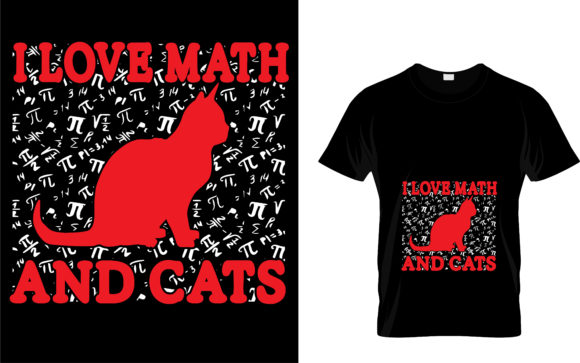
As an embroidery designer who has spent years digitizing files and testing them on everything from delicate baby onesies to heavy canvas tote bags, I approach every new T-Shirt Designs asset with a critical eye. It is not enough for a graphic to look good on a screen; it must translate flawlessly into thread. Recently, I evaluated the I Love Math and Cats design to see if it holds up under the needle. This piece of digital art promises charm, but does it deliver practical value for the modern craft business?
First Impressions and Visual Personality
The initial appeal of I Love Math and Cats lies in its playful juxtaposition of two very different worlds: the rigid logic of mathematics and the whimsical nature of felines. The layout feels balanced, avoiding the clutter that often plagues quote-based graphics. For an embroidery project, this clarity is vital. When you are converting vector lines into stitch paths, complex overlaps can lead to thread breaks or messy backsides.
The mood created here is lighthearted yet intelligent. It speaks directly to a niche audience—teachers, students, data analysts, and cat lovers—who appreciate humor that requires a bit of brainpower. As a reviewer, I look for designs that tell a story without screaming for attention. This graphic achieves that quiet confidence. It feels like something you would proudly wear to a faculty meeting or stitch onto a gift for a friend who spends their weekends solving puzzles.
Real-World Application: The Custom Sweatshirt Test
To truly understand the potential of this design, I imagined applying it to a real-life scenario: creating a custom embroidered sweatshirt for a high school math teacher. In this context, the I Love Math and Cats graphic serves as both a personal statement and a professional icebreaker. The design’s structure suggests it would work beautifully as a left-chest logo or a larger back print, depending on how you scale the elements.
For a sweatshirt embroidery project, the fabric texture plays a significant role. Fleece and cotton blends have a nap that can swallow small details. If the mathematical symbols in the design are too fine, they might get lost in the pile. However, if the original vector uses bold lines for the equations and distinct shapes for the cats, the finished product will remain legible. This is where your judgment as an Etsy seller or craft business owner comes in. You must decide if the design needs simplification before digitizing, or if the provided formats allow for easy adjustment.
Versatility Across Product Lines
Beyond apparel, this design shows promise for various handmade products. Consider a sturdy canvas tote bag design. The contrast between dark thread and light canvas can make the math equations pop, while the cat silhouette adds softness. For embroidered patch creation, the self-contained nature of the quote and image works well within a circular or rectangular border. Patches are increasingly popular for small shop products because they allow customers to add personality to jackets, hats, and backpacks without committing to permanent embroidery on the garment itself.
Even in the realm of baby embroidery, this concept could be adapted. Imagine a softer, pastel version stitched onto a nursery pillow cover or a baby blanket. While the math theme might seem advanced for an infant, parents who are engineers or scientists often love introducing these concepts early through cute, approachable imagery. It becomes a cherished personalized gift that grows with the child.
Technical Considerations for Stitching
When preparing any machine embroidery design for production, technical constraints are non-negotiable. The I Love Math and Cats file package includes EPS, JPG, PNG, Ai, and SVG formats. This is excellent for graphic designers using cutting machines or printers, but for embroiderers, it presents a specific challenge. These are vector and raster image formats, not native embroidery files like DST or PES. This means you will need to digitize the design yourself or hire a digitizer.
During digitization, pay close attention to stitch density. Mathematical symbols often contain sharp angles and thin lines. Using a satin stitch for these elements can provide crisp edges, but if the columns are too wide, they may snag. A running stitch might be better for very fine details, though it offers less coverage. For the cat shapes, a fill stitch with moderate density will ensure the animal looks solid without making the fabric stiff.
Always test the design on scrap fabric first. Check how the thread colors interact. High contrast is key here; black thread on white fabric is classic, but consider navy on heather gray for a more subtle, boutique look. Also, confirm your hoop size capabilities. If the design is wide due to the length of the quote, you may need a large hoop or a multi-hooping strategy, which increases production time and risk of misalignment.
Fabric and Stability Challenges
Not all fabrics behave the same way. On stretchy materials like jersey t-shirts, proper stabilizer usage is critical to prevent puckering around the dense areas of the cat’s body. On textured fabrics like towels or corduroy, the tiny details of the math symbols might disappear. In such cases, consider using an applique design technique where the cat is cut from fabric and stitched down, leaving the text embroidered. This reduces stitch count and adds tactile interest.
Be cautious with dark fabrics. If the design relies on light-colored threads for visibility, ensure your digitizing software accounts for pull compensation. Otherwise, the fabric showing through the stitches can make the design look sparse. Always inspect small details after the test run. Are the equals signs clear? Is the cat’s tail distinct? These micro-details determine the perceived quality of your finished product.
Commercial Value and Brand Consistency
For commercial embroidery professionals, the uniqueness of I Love Math and Cats is a selling point. It targets a specific demographic that is often underserved by generic pet or school-themed designs. By offering this on custom apparel, you differentiate your small shop product line from mass-market competitors. It builds brand consistency if your shop focuses on witty, intellectual, or niche-interest gifts.
However, before listing items on Etsy or at craft fairs, verify the licensing terms. Since you receive graphic formats, ensure you have the right to use the underlying artwork for commercial goods. Many vector artists allow commercial use for physical items but restrict digital resale. Clarify this to protect your business. Use printable mockup tools to showcase the design on various products before stitching a single thread. This helps gauge customer interest and refine your marketing message.
In conclusion, I Love Math and Cats is a strong candidate for creative entrepreneurs who understand the nuances of translation from screen to stitch. It requires thoughtful digitizing and material selection, but the result can be a charming, high-value item that resonates with buyers. Whether for a holiday embroidery gift or a year-round bestseller, this design invites you to blend precision with playfulness. Just remember to respect the technical limits of your machine and the fabric, and let the charm of the design shine through clean, professional stitching.