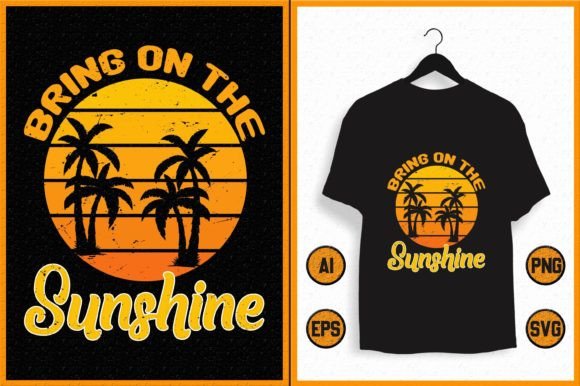
Vintage Bring on the Sunshine Shirt SVG Review
As a designer who has spent countless hours staring at digitized files and watching needles punch through fabric, I have developed a keen eye for what works in the real world. We often get caught up in the digital preview, admiring the crisp lines on a screen, but the true test of any machine embroidery design is how it translates to thread and texture. Recently, I evaluated the Vintage Bring on the Sunshine Shirt SVG to determine its viability for actual production. This is not just another graphic; it is a piece of visual communication that needs to hold up under the mechanical stress of an embroidery machine and the aesthetic scrutiny of a paying customer.
First Impressions and Visual Mood
The first thing that strikes you about this design is its inherent warmth. The title alone suggests a retro, carefree vibe, and the visual execution matches that promise. It does not rely on overly complex gradients or impossible details that would frustrate a standard home machine. Instead, it leans into bold shapes and clear typography, which is exactly what you want when working with thread colors and fabric texture. The layout feels balanced, avoiding the common pitfall of top-heavy designs that look awkward on curved surfaces like caps or soft items like baby clothes.
From a professional standpoint, the simplicity here is a strength. Complex T-Shirt Designs often fail because they try to do too much. This design understands its role as a focal point. It creates a mood of nostalgia and comfort, making it an ideal candidate for products that aim to evoke positive emotions. Whether you are creating a personalized gift for a friend or stocking your Etsy seller shop with summer-themed apparel, the visual personality of this file aligns perfectly with current trends in boutique branding.
Real-World Application Scenarios
To truly understand the value of this asset, I imagined several practical scenarios where I would deploy it. My primary test case was a custom canvas tote bag design. Canvas is a forgiving yet textured medium. I envisioned using a dense fill stitch for the main elements to ensure coverage against the weave of the fabric. The result would be a sturdy, high-quality handmade product that appeals to eco-conscious buyers. The design’s vintage aesthetic pairs beautifully with natural fiber tones like oatmeal, sage green, or terracotta.
Another strong application is sweatshirt embroidery. Here, the challenge is always the pile of the fleece. A design with too many tiny details gets lost. However, the bold nature of this Graphics file means it should remain legible even on thick, plush fabrics. I also considered its use for holiday embroidery projects, specifically for spring break or summer vacation kits. Imagine this stitched onto a matching set of beach towels or aprons for a family reunion. The commercial potential for such coordinated sets is significant for any craft business owner looking to increase average order value.
Technical Considerations for Stitching
While the design is visually appealing, we must discuss the technical realities of turning a digital file into a finished product. Since this is marketed primarily as a print template, those of us in the embroidery niche need to be cautious. If you are converting this SVG into an embroidery file, pay close attention to stitch density. Vintage styles often benefit from a slightly looser density to allow the fabric to breathe and prevent puckering, especially on lighter materials.
If you are using this as a reference for an applique design, the clear outlines are a major advantage. Applique reduces stitch count and adds a lovely textural contrast. You could layer a sunny yellow fabric under the stitched outline to create a vibrant pop that stands out against dark denim or navy blue. For those using it directly as a digital embroidery file if available, always check the sequence. Does it jump excessively? Are there enough tie-offs? These are questions you must answer before committing to a client project.
Be mindful of hoop size constraints. If the design is large, it may require a 5x7 or larger hoop. Always measure your garment placement carefully. On a custom apparel piece like a fitted tee, centering is critical. A misaligned design can ruin the perceived quality of the entire item. Additionally, consider the stabilizer you use. For stretchy fabrics like jersey knits, a cut-away stabilizer is non-negotiable to maintain the integrity of the design after washing.
Navigating Fabric and Detail Challenges
Not every fabric is created equal. When working with this design on thin or delicate materials, such as silk or lightweight rayon, you risk pull-through. In these cases, I recommend using a water-soluble topping to keep the stitches sitting on top of the fabric rather than sinking in. Conversely, on heavy-duty items like an embroidered patch for a jacket, you can afford to be more aggressive with satin stitches to create a raised, tactile effect.
One area requiring careful review is small lettering or intricate corners within the design. If the original SVG has fine serifs or thin lines, these may not translate well to thread. Thread has thickness; it cannot replicate a hairline vector stroke. You may need to simplify certain elements or thicken lines during the digitizing process to ensure clarity. Always run a test stitch on scrap fabric of the same type you intend to use for the final product. This simple step saves hours of frustration and prevents wasted materials.
Enhancing Brand Value and Customer Trust
Ultimately, the choice of design impacts your brand perception. Using a well-balanced, aesthetically pleasing file like Vintage Bring on the Sunshine Shirt SVG signals professionalism. Customers can sense when a design is cluttered or poorly executed. A clean, intentional design builds trust. It suggests that the maker cares about quality. This is crucial for small shop product lines where repeat business depends on satisfaction.
When creating printable mockup images for your online store, this design offers great versatility. It looks good in black and white, which helps customers visualize it on various colored garments. Use these mockups to show the design on different items—caps, pillows, shirts—to demonstrate its flexibility. This helps buyers imagine the personalized gift in their own lives, increasing conversion rates.
Final Designer Notes
Before you integrate this into your workflow, verify the licensing terms. The description mentions it is for personal use and support, but if you plan to sell commercial embroidery items, ensure you have the right to do so. Check if the file format includes native embroidery formats or just vectors. If it is just an SVG, remember that you will need to digitize it yourself or hire a digitizer, which adds time and cost to your project.
Test thread color contrasts rigorously. A vintage sun motif might look muddy if the yellow is too close in value to the background fabric. High contrast ensures readability from a distance. Inspect the design for any closed shapes that might trap air or cause nesting issues during stitching. By taking these practical steps, you transform a simple digital asset into a high-value design assets component of your creative business. Whether for a baby embroidery project or a boutique clothing line, thoughtful preparation ensures that Vintage Bring on the Sunshine Shirt SVG shines in its final form.