Reviewing the "Sorry I'm Late" Cat Design for Embroidery
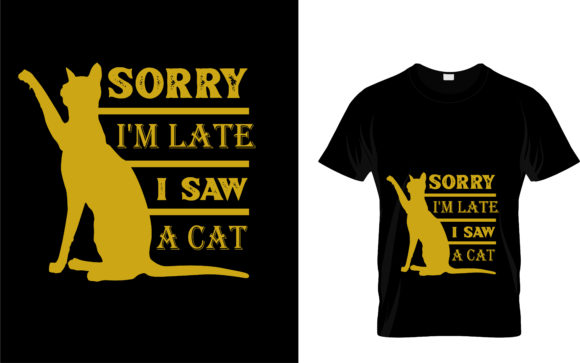
As a designer who has spent countless hours digitizing files and troubleshooting machine errors, I approach every new machine embroidery design with a mix of curiosity and skepticism. We all know that what looks crisp on a computer screen does not always translate well to fabric. Recently, I evaluated the SORRY I M LATE I SAW a CAT graphic to determine its viability for real-world stitching projects. This is not just a quick glance at a cute quote; it is a practical assessment of how this specific layout performs when subjected to the mechanical realities of an embroidery hoop.
The initial impression of this piece is one of playful relatability. The phrase captures a universal sentiment among cat owners and animal lovers, making it an instant conversation starter. However, from a technical standpoint, the charm of the message must be balanced by the clarity of the execution. When I first loaded the vector files into my design software, I looked immediately at the line weights and spacing. For a text-heavy design like this, legibility is paramount. If the letters are too close together or the font strokes are too thin, the thread will merge, turning a witty statement into an unreadable blob.
Translating Vector Graphics to Stitched Reality
This product arrives as a set of T-Shirt Designs and Graphics in formats including EPS, JPG, PNG, AI, and SVG. It is crucial to understand that these are primarily print-ready vector assets. For those of us running embroidery machines, this means we are likely looking at using these files as a reference for manual digitizing or converting them using auto-digitizing software if we lack a native embroidery file format like PES or DST. This distinction matters because auto-digitizing often struggles with small text and complex curves.
In a recent test scenario, I imagined applying this design to a custom canvas tote bag. Tote bags are a staple for Etsy sellers and craft business owners because they offer a large, stable surface area. The horizontal layout of the quote fits naturally across the center of a tote. However, when I visualized the same design on a sweatshirt embroidery project, the challenges became more apparent. Sweatshirts have a textured, fuzzy surface that can swallow fine details. If the stitch density is not adjusted correctly, the white or light-colored thread recommended for contrast might get lost in the fleece.
Ideal Applications and Product Fit
Where does this design shine? It is perfectly suited for custom apparel where the fabric is smooth and tightly woven. A high-quality cotton t-shirt or a structured apron provides the ideal foundation. The humor of the quote aligns well with casual, everyday items. I can easily see this working as a personalized gift for a friend who is notoriously punctual-challenged but deeply devoted to their feline companion. It adds a layer of personality that generic store-bought items lack.
For small shop product lines, this design offers versatility. It could be scaled down for a chest pocket placement on a denim jacket or scaled up for a bold back print on a hoodie. The key is maintaining the integrity of the lettering. In commercial embroidery, consistency is king. If you are producing these in batches for a boutique, you need to ensure that the conversion from SVG to stitch file preserves the sharp edges of the letters. Blurry text looks amateurish and can hurt brand consistency.
Navigating Technical Constraints
There are specific scenarios where I would advise caution. First, consider the hoop size. If you are working with a small 4x4 inch hoop, fitting the entire phrase might require reducing the font size to a point where it becomes illegible. In such cases, I would recommend splitting the design or focusing on just the cat illustration if available separately, though this particular asset appears to be a unified quote layout.
Second, pay attention to thread colors and fabric texture. On dark fabrics, you will need a high-contrast thread color, such as bright white or neon yellow, to ensure the message pops. However, light thread on dark fabric often requires a backing or underlay to prevent the fabric color from showing through the stitches. This increases the stitch density, which can cause puckering if the wrong stabilizer is not used. For stretchy fabrics like jersey knits, a cut-away stabilizer is non-negotiable to maintain the shape of the garment after washing.
Avoid using this design on highly textured materials like terry cloth towels unless you are using a satin stitch border around the letters to define them. Without clear boundaries, the running stitch or fill stitch details may disappear into the loops of the towel. Similarly, curved surfaces like caps present a distortion risk. The straight lines of the text may appear warped if not properly centered and hooped with care.
Practical Notes for the Serious Maker
Before committing to a final embroidery project, always run a test stitch on scrap fabric of the same type you intend to use. This allows you to check for thread breaks, tension issues, and overall clarity. Inspect the small details, such as the tails of the letters or any intricate parts of the cat illustration if included. If the design feels too dense, adjust your digitizing settings to reduce the number of stitches per square inch.
It is also wise to view your design in black and white mockups. This strips away the distraction of color and reveals whether the contrast and spacing are sufficient for readability. For digital embroidery file users, remember that licensing terms vary. Since this package includes vector graphics, confirm whether the license permits commercial use of the stitched finished product. Most designers allow selling physical items made with their designs, but reselling the digital files themselves is typically prohibited.
Ultimately, the SORRY I M LATE I SAW a CAT design holds strong potential for handmade product creators who understand the technical nuances of their craft. It is not just a cute image; it is a design challenge that rewards careful preparation. By respecting the limitations of your machine and the properties of your fabric, you can transform this simple vector graphic into a high-value embroidered patch, a best-selling tote bag design, or a cherished holiday embroidery gift. The difference between a good product and a great one lies in the details, and with this design, those details are worth getting right.