Reviewing Family Food Faith Football for Embroidery
As a designer who has spent countless hours digitizing and stitching out themes for clients, I have learned that the most successful designs are not always the most complex. Often, it is the concepts that tap into universal values with clean execution that become bestsellers. Recently, I evaluated Family Food Faith Football to determine its viability for real-world embroidery projects. This is not just a graphic; it is a statement piece that resonates deeply with a specific demographic, making it a high-potential asset for craft businesses and boutique owners.
First Impressions and Visual Personality
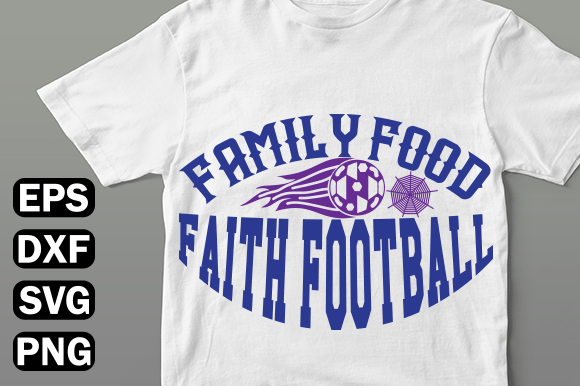
The immediate appeal of Family Food Faith Football lies in its balanced composition. The layout typically arranges these four pillars of life in a way that feels cohesive rather than cluttered. From a design perspective, the typography and iconography work together to create a mood that is warm, traditional, and grounded. It evokes a sense of Sunday dinners, weekend games, and shared values. For an embroidery project, this thematic clarity is crucial. When a customer sees this design on a finished product, they instantly understand the narrative without needing explanation.
The visual personality is versatile. It does not lean too heavily into aggressive sports aesthetics nor does it feel overly religious or rigid. Instead, it strikes a harmonious middle ground. This makes it suitable for a wide range of applications, from casual weekend wear to home decor. As a reviewer, I look for designs that do not fight the fabric, and this concept allows for various stylistic interpretations, whether through bold block letters or softer, script-based fonts accompanied by simple icons like a cross, a football, a heart, or utensils.
Real-World Application: The Custom Sweatshirt Test
To truly understand how Family Food Faith Football performs, I mentally walked through a common scenario: creating a custom embroidered sweatshirt for a client’s family reunion. In this context, the design needs to be legible from a distance but detailed enough to hold up under close inspection. On a mid-weight cotton blend hoodie, this design shines. The horizontal or stacked layout fits naturally across the chest or on the upper back.
For an Etsy seller or small shop owner, this type of custom apparel is a bread-and-butter item. The design’s theme aligns perfectly with the current trend of personalized, value-driven clothing. When stitched out, the contrast between the thread colors and the garment fabric becomes the focal point. I found that using classic thread colors—such as navy, forest green, or burgundy on heather gray or cream fabric—enhances the traditional feel. The design does not require excessive density to make an impact, which is a significant advantage for comfort and durability in wearable items.
Versatility Across Product Lines
Beyond sweatshirts, this design translates well to other popular categories. Consider a tote bag design for a church group or a sports mom. The sturdy canvas of a tote bag handles embroidery beautifully, allowing the stitch texture to pop. Here, Family Food Faith Football acts as a badge of identity. Similarly, for baby embroidery, such as on a onesie or a soft blanket, the design can be scaled down. However, care must be taken with scale. Tiny lettering can become illegible if the design is reduced too much, so simplifying the elements for smaller hoops is a necessary step for infant items.
Home decor items like pillow covers and kitchen towels also benefit from this theme. A tea towel with this motif makes for an excellent holiday embroidery gift or a housewarming present. In these applications, the design adds a touch of personality to functional items, increasing their perceived value as handmade products. For digital product sellers, offering this as part of a bundle with coordinating graphics can boost average order value, provided the licensing allows for such commercial use.
Technical Considerations for Stitching
While the concept is strong, the technical execution determines the quality of the final product. When working with Family Food Faith Football, attention to stitch density is paramount. If the design includes solid fill areas behind text or icons, ensure the density is appropriate for the fabric. High-density fill stitches on thin fabric can cause puckering, while low density on thick fleece may leave gaps where the background shows through.
Stabilizer selection is another critical factor. For stretchy fabrics like jersey tees or tank tops, a cut-away stabilizer is essential to maintain the shape of the embroidery after washing. For woven fabrics like tote bags or aprons, a tear-away stabilizer may suffice, but testing is always recommended. I advise running a test stitch-out on scrap fabric before committing to the final garment. This allows you to check thread tension, color contrast, and registration accuracy.
Lettering requires special attention. Small serifs or intricate details in the font can get lost if the needle size is too large or if the thread frays. Using a finer thread, such as 60-weight polyester, can help capture delicate details in the text. Additionally, consider the hoop size. Ensure the entire design fits comfortably within your machine’s hoop without needing to re-hoop, which can lead to alignment issues. If the design is larger than your standard hoop, verify that it has been properly split or optimized for multi-hooping.
Navigating Fabric and Surface Challenges
Not every surface is ideal for this design. Curved surfaces like caps present a challenge due to the distortion of the fabric. If applying Family Food Faith Football to a hat, consider simplifying the design or using an applique design technique to reduce bulk. Applique can also be a great option for larger items like blankets, where reducing stitch count helps keep the item soft and flexible.
Dark fabrics require careful thread color selection. Light threads on dark fabric can sometimes appear sparse if the underlay is not sufficient. Conversely, dark threads on dark fabric may lack visibility. Always test your thread colors against the specific fabric stock you intend to use. For textured fabrics like terry cloth or waffle knit, the embroidery may sink into the pile. Using a water-soluble topping can help the stitches sit on top of the texture, ensuring clarity and professionalism.
Commercial Value and Brand Consistency
For commercial embroidery and small business merchandise, consistency is key. Family Food Faith Football offers a reliable aesthetic that can become part of a brand’s signature look. When used in printable mockups or digital embroidery file previews, it attracts buyers looking for meaningful, ready-to-stitch designs. The emotional connection customers feel with the themes of family and faith often translates to higher engagement and willingness to pay for quality customization.
However, before selling finished items or digital assets, it is imperative to confirm licensing terms. Not all designs are cleared for commercial use. Check the provider’s guidelines to ensure you are compliant. Assuming the license permits, this design can be a valuable addition to your portfolio of T-Shirt Designs and Graphics. It appeals to a broad audience, making it a safe yet impactful choice for craft fairs, online listings, and boutique branding.
Final Verdict
In conclusion, Family Food Faith Football is a robust choice for embroiderers looking to create meaningful, marketable products. Its strength lies in its relatable theme and adaptable layout. By paying attention to technical details like stabilizer choice, thread contrast, and fabric suitability, you can produce high-quality finished products that resonate with customers. Whether for a personalized gift, a holiday embroidery project, or a staple item in your craft business, this design holds up well under scrutiny and delivers genuine visual appeal.